
Introduction
As we learn in basic physics, energy cannot be created or destroyed. When an engine running at full speed is suddenly braked, a large amount of energy is released. That energy does not disappear. It pushes back into the system.
Picture an electric vehicle braking hard at highway speed. The wheels slow down, but the electrical energy, having nowhere to go, rushes back into the system. If this energy is not controlled, heat builds up quickly. Power electronics come under stress. Drives begin to trip. In severe cases, the entire system can shut down without warning.
This is where braking and load resistors step in. They give excess energy a safe path by absorbing and releasing it as controlled heat. In high-energy systems, they are our safeguards.
Braking and load resistors have earned their place in this role. Their dominance in resistor manufacturing comes from how they perform when systems are pushed hard.
What Is a Braking and Load Resistor
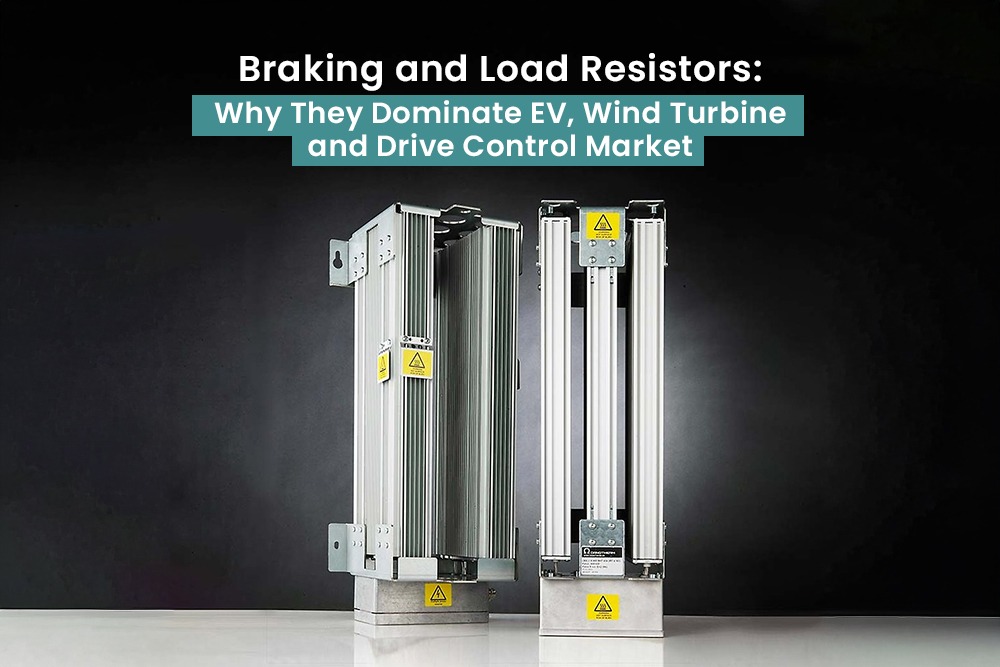
A braking and load resistor is designed for moments of stress. It operates when systems decelerate, when loads shift suddenly, and when regenerative energy spikes.
Many resistors are designed around steady operation. Real systems rarely behave that way. Braking events are short, intense, and repeated. Each event sends a pulse of energy that tests thermal limits and mechanical strength.
Braking and load resistors are built around this reality. Their design focuses on:
- absorbing high pulse energy
- keeping temperature rise under control
- maintaining stable resistance values
- surviving repeated braking cycles
The construction spreads heat across the resistor body instead of concentrating it in one spot. This reduces cracking, resistance drift, and early failure.
For Electronic Component Suppliers working with demanding applications, this predictability matters. It allows engineers to design systems that behave the same way on day one and years later.
Applications
Braking and load resistor resistors appear in systems where energy control directly affects safety.
Electric Vehicles
Regenerative braking feeds energy back into the system. Batteries cannot always absorb it, especially during hard braking or when fully charged. In those moments, braking resistors protect inverters and power electronics. They keep braking smooth and controlled when conditions are less than ideal.
Wind Turbines
Wind never arrives in neat, predictable patterns. When turbines slow down to prevent overspeed, large amounts of generated energy must be absorbed quickly. Braking resistors protect converters and mechanical components during these transitions.
Industrial Drive Control
Cranes, elevators, conveyors, and rolling mills often stop under load. Each stop releases stored mechanical energy into the electrical system. braking and load resistors allow drives to decelerate without stress or instability.
Rail and Transportation
During braking, traction systems generate high regenerative currents. Load resistors prevent voltage rise and protect sensitive electronics throughout the braking cycle.
Across all these systems, one requirement stays constant. The resistor must work every time, not just occasionally.
Why Industry Prefers Braking and Load Resistor
The preference for braking and load resistors is built on experience.
They handle large energy pulses without cracking or drifting. Their thermal behavior stays controlled even during repeated braking events. Their mechanical design holds up in environments with vibration, shock, and outdoor exposure.
Most importantly, their electrical performance remains stable. Control systems rely on known resistance values to behave correctly. When that value shifts, control accuracy suffers.
Years of use in EVs, wind turbines, and heavy industry have built confidence. Many Resistor Manufacturers measure their own braking resistor designs against braking and load resistor performance benchmarks because they represent a proven standard.
Comparison With Other Braking Resistors
Not all braking resistors face the same demands.
| Aspect | Standard Braking Resistor | PEC Mfg. Co Resistor |
| Energy handling | Moderate | Very high |
| Thermal management | Limited | Optimised |
| Duty cycle | Low to medium | High and repetitive |
| Mechanical strength | Basic | Industrial grade |
| Lifespan under stress | Shorter | Extended |
| Typical use | Light drives | EVs, wind, heavy industry |
Standard resistors perform well in light-duty applications. In systems with frequent braking and regenerative energy, they wear out faster. braking and load resistors continue performing because they are designed for that workload from the start.
Where Braking Resistors Are Headed
Electrification is increasing energy density across industries. Systems are becoming smaller, faster, and more powerful.
This puts more pressure on braking resistors. Higher power density demands compact designs that handle larger energy bursts. Cooling integration is becoming part of the resistor decision, not an afterthought. Growth in EVs and renewable energy continues to raise expectations for reliability.
At the same time, smarter drive controls rely on predictable resistor behavior. Precision at the component level supports stability at the system level.
In response, Electronic Component Suppliers are focusing on designs with a proven record under real operating conditions.
Conclusion
Braking and load resistors decide how safely a system handles excess energy. In EVs, wind turbines, and industrial drives, that decision affects uptime, control, and safety.
Braking and load resistors resistors lead these markets because they perform when systems are under stress. They absorb energy reliably, manage heat effectively, and maintain stable electrical behavior over time.
When selecting braking resistors for demanding applications, the choice of Resistor Manufacturer matters. We work with trusted solutions and support engineers in selecting Braking and load resistors resistors that match system energy levels, duty cycles, and thermal requirements.