
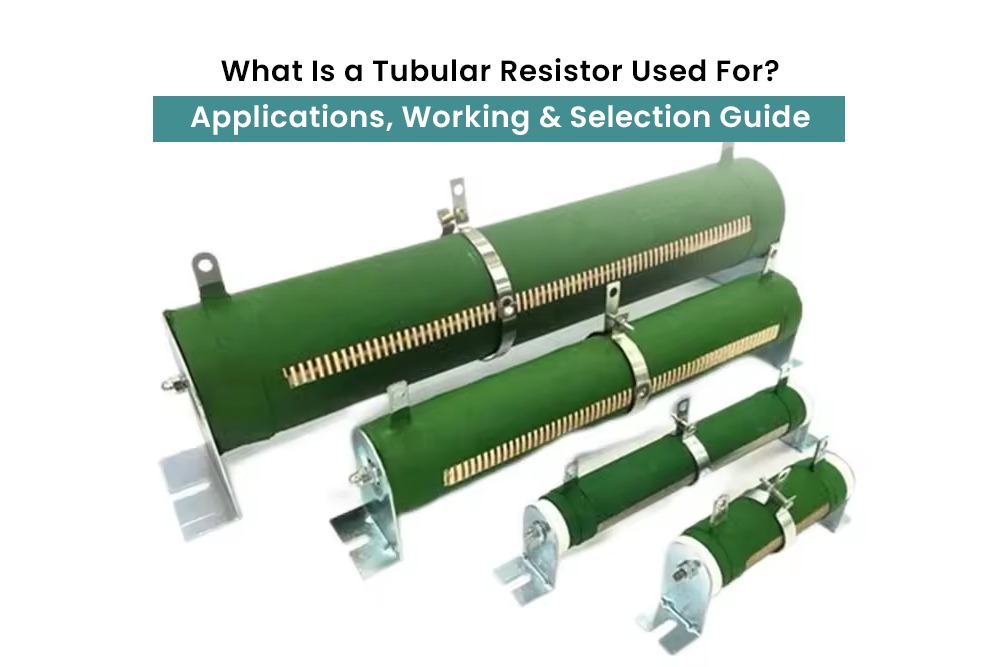
In high-power systems, you can’t simply connect everything directly. You need to control current, manage energy, and protect sensitive components—or risk inefficiency, system damage, and safety hazards. To handle these fluctuations, tubular resistors are trusted solutions.
These tube-like resistors are built to withstand high energy, high voltage, and pulse loads, making them indispensable across industries. In this guide, we’ll explore what tubular resistors are, how they work, and what to consider when selecting the right one from a reliable resistor manufacturer or electronics components supplier.
What are Tubular Resistor’s Core Function?
A tubular resistor is essentially a heavy-duty energy manager. It converts excess electrical energy into heat, shielding fragile components from damage. They excel in demanding applications where ordinary resistors fail—such as surge currents, inrush currents, or repeated energy pulses.
Key functions of tubular resistors include:
- Inrush Current Limiting: Protects circuits by absorbing sudden surges during power-up of capacitive or inductive loads.
- Dynamic Braking / Energy Dissipation: Safely dissipates stored or regenerative energy, as in electric motors or braking systems.
- Load Simulation (Load Banks): Provides controlled resistance for testing power supplies and battery systems.
- Capacitor Discharge Resistor / Bleeder Resistors: Ensures capacitors and other high-energy components safely discharge after shutdown.
- Voltage Dropping / Current Limiting: Maintains precise voltage and current control, preventing overloads.
At their core, tubular resistors limit, absorb, or dissipate energy where conventional resistors would falter.
Where are Tubular Resistors Used?
Tubular resistors are widely deployed in industries where high reliability and energy control are non-negotiable. Their robust design allows consistent performance under heat, surges, and mechanical stress.
Industrial Automation & Motors
- Dynamic braking for motors and drives
- Load testing in power supplies and inverters
Renewable Energy Systems
- Energy discharge in solar and wind inverters
- Capacitor discharge resistors for battery storage protection
Electric Mobility & Transportation
- Battery discharge resistors for EVs
- Electric braking in rail and automotive systems
High-Power Electronics
- UPS pre-charge resistors
- Surge absorption and fault control
In these applications, tubular resistors ensure operational safety, longevity, and efficiency—making them indispensable components.
How Does Tubular Resistors Ensure safety, longevity, and efficiency?
Tubular resistors work on the principle of ohmic energy dissipation. When current flows through the resistive element inside the cylindrical tube, electrical energy is safely converted into heat. The tube’s cylindrical design enhances heat dissipation and ensures mechanical durability.
Key operating principles include:
- Resistive Element: Typically made from a high-grade alloy or conductive ceramic, shaped into a cylindrical tube to optimize surface area for heat dissipation.
- Encapsulation & Insulation: Ensures safe operation at high temperatures, often including ceramic coatings or flame-retardant materials.
- Thermal Management: Tubular design maximizes cooling efficiency, enabling consistent performance under repeated high-current pulses.
- Energy Absorption: Absorbs short-term surges without compromising the resistor’s integrity or connected circuitry.
Example: In industrial motors with dynamic breaking, sudden stops produce regenerative energy. A tubular resistor safely soaks up that energy, preventing voltage spikes and protecting the motor controller.
PEC tubular resistors are optimized for both continuous power dissipation and short-term pulse handling, meeting the rigorous demands of modern industrial and automotive electronics.
Selection Criteria: What to Consider for Different Requirements
Choosing the right tubular resistor is like picking the right tool for a high-stakes job—a mismatch can lead to system inefficiency, unexpected downtime, or even component failure. Every application has its story, and the resistor must fit seamlessly into it Key parameters to consider:
- Power Rating (Watts): Ensure the resistor can handle peak and continuous loads (e.g., 50 W–5 kW for industrial applications).
- Resistance Value (Ohms): Determines current limiting and energy absorption (common range: 0.01 Ω – 100 kΩ).
- Tolerance (%): Precision against nominal value; low tolerance (<1%) may be needed in test and calibration setups.
- Thermal Stability: Minimal resistance drift at high temperatures; essential for EV and motor drive applications.
- Voltage Rating: Must withstand system voltage without dielectric breakdown.
- Physical Size & Mounting: Consider PCB integration, heat sink compatibility, and space constraints.
- Certification Requirements: UL, CE, AEC-Q200 compliance may be critical for automotive or aerospace projects.
Proper evaluation ensures both system reliability and long-term safety, reducing maintenance and downtime costs.
Comparing Tubular Resistors to Other Types
When engineers face demanding applications, choosing the right resistor is crucial. It needs to withstand pressure, heat, and repeated stress without failing.
Advantages of Tubular Resistors:
- High energy handling and surge tolerance: Built to absorb spikes and sudden currents, keeping sensitive components safe.
- Excellent thermal management: The tubular design efficiently dissipates heat, preventing overheating even under heavy loads.
- Flexible mounting options: Cylindrical construction allows integration into high-current circuits in varied setups.
- Long lifespan: Durable under repetitive load cycles, ensuring consistent performance over years of operation.
Drawbacks:
- Larger footprint: Tubular resistors take up more space than thin-film or wirewound alternatives.
- Higher upfront cost: Initial investment is greater, but this is offset by lower failure risk in critical systems.
This balance makes tubular resistors ideal where performance and reliability outweigh space or cost constraints.
Sourcing & Partnering With PEC: Your Trusted Manufacturer
In high-power and high-reliability systems, selecting the right tubular resistor is only part of the solution; partnering with a trusted resistor manufacturer you can trust is equally critical. That’s where PEC (Precision Electronic Components) comes in. With decades of expertise in designing and producing high-performance tubular resistors and capacitor discharge resistors, PEC ensures your systems operate safely, efficiently, and reliably.
PEC offers:
- Custom Tubular Resistors: Tailored resistance, power, and pulse-handling capabilities for industrial, automotive, and renewable energy applications.
- High-Quality Materials: Premium alloys and ceramics engineered for long-term durability and consistent performance.
- Global Certifications: UL, CE, and AEC-Q200 compliance for automotive, industrial, and aerospace standards.
- Technical Support: End-to-end guidance from initial design to deployment, helping engineers integrate resistors seamlessly into complex systems.
As a leading name among electronics components suppliers, partnering with PEC means more than just buying components. It’s access to precision-engineered solutions, expert support, and the assurance that your high-power systems are built to last.
Innovations in Tubular Resistor Technologies: What’s Next?
Modern tubular resistors are evolving to meet the demands of high-speed, high-power systems:
- Improved Thermal Efficiency: Advanced ceramic coatings and heat sinks reduce operating temperatures.
- Compact Designs for High Power: Miniaturized tubular resistors for space-constrained applications.
- Enhanced Pulse Tolerance: Optimized for frequent inrush currents and regenerative braking cycles.
- Integration with Monitoring: Embedded sensors for temperature or degradation tracking in real-time systems.
These developments position tubular resistors as future-ready solutions for next-generation electronics and EV systems.
Tubular resistors and capacitor discharge resistors are indispensable in high-power, high-reliability applications, offering unmatched surge handling, energy absorption, and thermal stability. Choosing the right resistor is like equipping your system with the right safety net—it requires careful attention to power rating, resistance value, thermal performance, and certifications.
Partnering with a trusted resistor manufacturer and electronics components supplier like PEC means you’re gaining a partner who understands the pressures your system faces and delivers tailor-made solutions built to last in industrial, automotive, and renewable energy environments.
Ready to upgrade your high-power designs? Explore PEC’s range of precision tubular resistors and consult our experts for customized solutions.